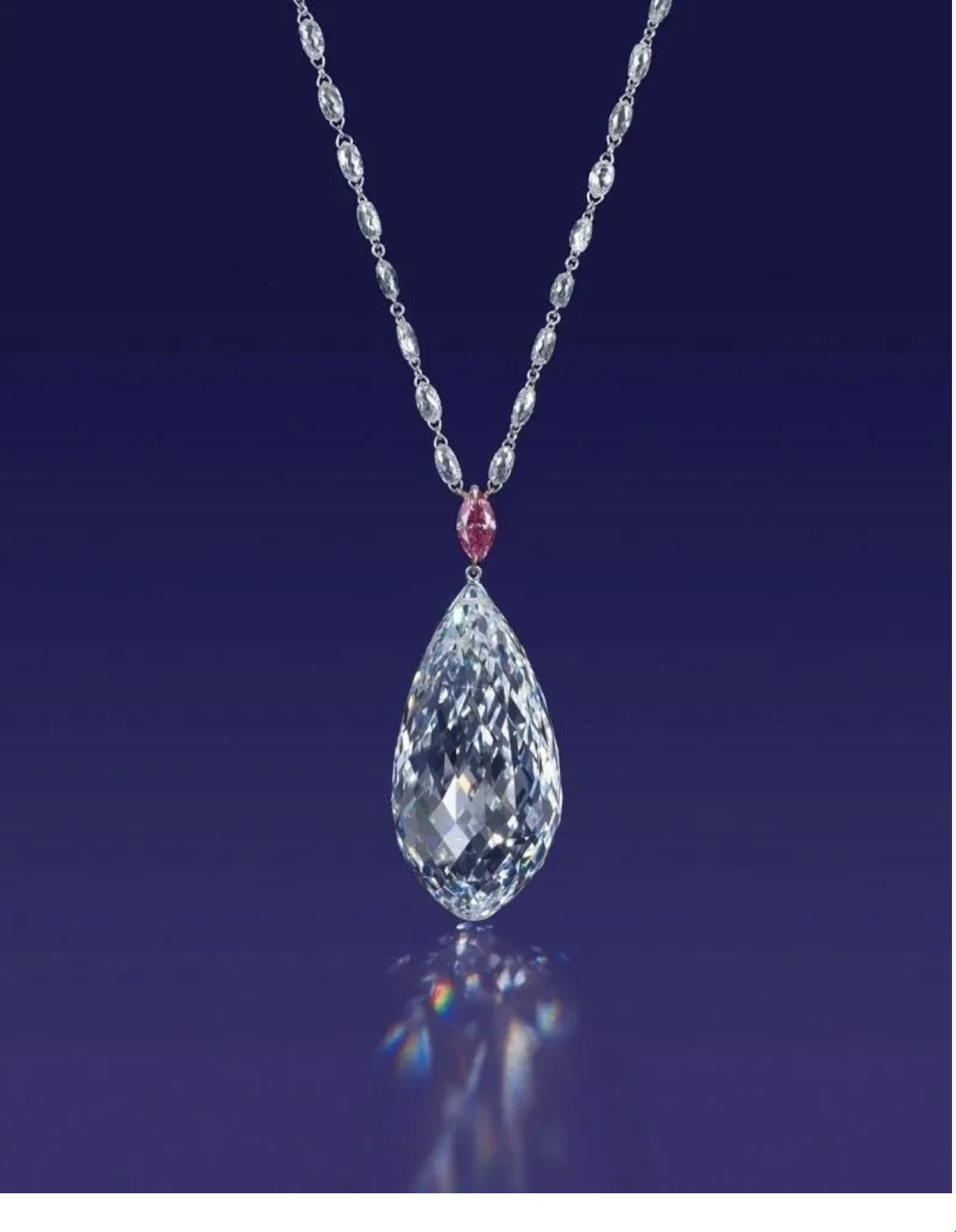
The Briolette: Jewelry’s Ultimate If-You-Know-You-Know Shape
“With no table, no girdle, no culet, and no shortcuts, this ancient diamond cut reflects light in every direction and is one of jewelry’s most challenging and rare forms.
What is a Biolette Cut Diamond?
The briolette diamond cut is one of the oldest gemstone cuts known to us and arguably the most distinctive. If modern diamond cutting focuses on maximizing brilliance from a face-up view, this cut takes an entirely different approach. It invites light from every direction, rewarding movement, curiosity, and a deeper appreciation of craftsmanship. It stands apart as a three-dimensional sculpture carved from diamond.
A briolette diamond is immediately recognizable once you know what you are looking at. The cut forms a teardrop or elongated oval shape, fully faceted on all sides. It has no flat table, no girdle, and no pointed culet. Instead, the entire surface consists of triangular or occasionally rectangular facets that wrap continuously around the stone. Because of this, a diamond of this cut cannot sit upright in a traditional ring setting.
To be fully appreciated, a briolette diamond must hang freely. Jewelers typically drill a minuscule hole at the narrow end of the stone so a wire can pass through, allowing it to dangle upside down. When worn this way, the diamond’s rounded body catches light from every angle, producing a soft, rolling shimmer rather than the sharp flashes associated with modern brilliant cuts. This motion-driven sparkle defines the briolette’s charm.”
The Origins of the Briolette Cut Diamond…
…read on by clicking on the link below for more fascinating and intriguing history of this unique diamond cut dating way back as early as the 17th century.